南非SABS认证

南非国家标准局(South African Bureau of Standards,SABS)是根据1945年颁布的《国家标准法》设立的,属南非贸工部下属机构。
SABS是南非的一个中立的第三方认证机构,负责南非的体系认证及产品认证。除制定标准的职责外,SABS还代表国家管理强制性规范标准,对符合规范的产品,授予标志使用权,此外还负责对符合ISO9001、ISO9002的企业颁发证书,并代表国家和一些主要的购买商负责装船前的检验和测试,颁发合格证书。SABS 认证广泛应用于化学制品,生物制品,纤维制品和服装,机械制品,安全设备,电工产品,土木和建筑以及汽车产品等领域。
ABS认证分为产品认证和体系认证两大类,而SABS产品认证主要包括以下八大类:化学制品,生物制品,纤维制品和服装,机械制品,安全设备,电工产品,土木和建筑以及汽车产品。其中,涉及到的建筑材料和产品有:石制品,混凝土制品,屋顶材料,水泥,石灰,水泥混合剂,天然建筑用石,安全玻璃,钢结构,木材及木制品,砖,瓦,油漆,涂料,密封胶等。
申请流程:
1. 制造商填写完整地申请表;
2. 如果工厂有不止一处的厂房,则要求另填申请表。认证范围内的每个产品都要求体现在申请表上。另外,工厂还需要填写负责人的信誉的申请表,该负责人要保证第一次审查费和其他的认证费用;
3. 南非标准局收到申请表后,将会发出一份审核的报价单;
4. 在报价被认可的前提下,南非标准局将会进行工厂的审查;
5. 如果以上审核都通过了,南非标准局将会准备每年的监督合约;
6 每年将会有两位审核员进行随机审查,每年的监督审查和测试的费用将在合约上写明;
7. 两位审核员将会抽查样品带回实验室;
8. 以后的测试的样品,南非标准局将会从南非的买家的货物中抽取,如果货物的批次是少于4次每年的,那么不够的样品就要求从工厂寄出,其费用将由工厂承担;
9.如果测试结果是不合格的话,那么样品的费用和重测的费用都将由工厂承担;
10. 证书的有效期将会是三年,除非有其他原因取消证书。
1.南非的认证分两种情况:第一种申请就是申请LOA和COC这个对于南非的进口是强制的,而这种认证程序是不准标贴SABS商标在产品的label上面的, 此种申请不需要厂检;第二种申请是基于第一种申请的基础上可以再次申请SABS Mark的使用,这种标志的使用是需要经过一系列的厂检手续,花费很多,每年还必须缴纳一定数量的年费和厂检费用作为标志的使用权。
2.COC是EMI测试,LOA是letter of authority代理商的认可,直接去和南非申请
1 、首先企业必须指定一个代理商(Agent),代理商将申明对所有数据信息以及售后等所有事项负责。南非道路交通法(Act93:1996)要求进口商在当地的交通部进行注册;
2、南非是英制国家,属于右舵成员国,同时只有顺利注册后才可以继续测试并提交文件到SABS等工作;
3、应该严格依据南非相关标准完成所有测试项目并且将满足NRCS的报告等技术文件资料提交;
4、整个认证流程包括两个部分:测试报告审查和样品一致性检查;(备注:样品的检查可以根据企业需要安排在国内或者南非进行)
5、一旦所有资料和样品通过了NRCS的审核和评估,NRCS将会发放证书。一般情况下整个审核过程不超过15个工作日。
6、证书有效日期:只要适用的标准法规没有变更,同时样品没有任何修改,证书就会持续有效;
7、NRCS将会负责生产一致性控制,如发现样品型号不符,其有权收回证书。
8、为了确保生产一致性,NRCS可能在证书申请后的一段时间后进行工厂审查。

Introduction
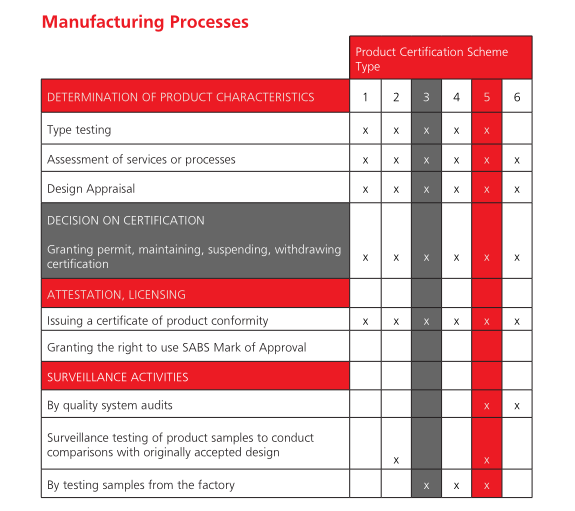
The SABS Mark Scheme is a voluntary certification process by which a third party (i.e. SABS Commercial) gives assurance that a product fulfils specified requirements. The SABS Mark Scheme applies only to products/commodities for which South African National Standards (SANS) exist. The SABS Mark Scheme is accredited to ISO 17065 and an ISO 17067 type 5 & 3 accredited product certification scheme. The SABS Mark is applied to both locally manufactured and imported products/commodities.
The SABS Mark is a highly recognisable symbol of credibility and a powerful marketing tool, which reinforces your product’s intrinsic features. It strengthens your point-of-sale impact and gives your product greater credibility and prestige in the market place. The on-going improvement of your quality system is an essential part of the SABS Mark Scheme and is therefore a clear demonstration of your company’s dedication to quality management.
The following are some of the many reasons why every South African manufacturer and importer of products should obtain the SABS Mark:
• You get real point-of-sale differentiation (SABS brand), resulting in more sales and greater revenue
• Our independent certification provides assurance and peace of mind to your management and customers that your product quality is maintained
• You can be very proud of the quality of the product(s) that you sell in the market place. Having your products independently tested and certified, proves that you have achieved your design and manufacturing objectives, and
• Your quality control/assurance system is regularly audited, thereby ensuring that your system continually improves and contributes towards the achievement of consistent good product quality.
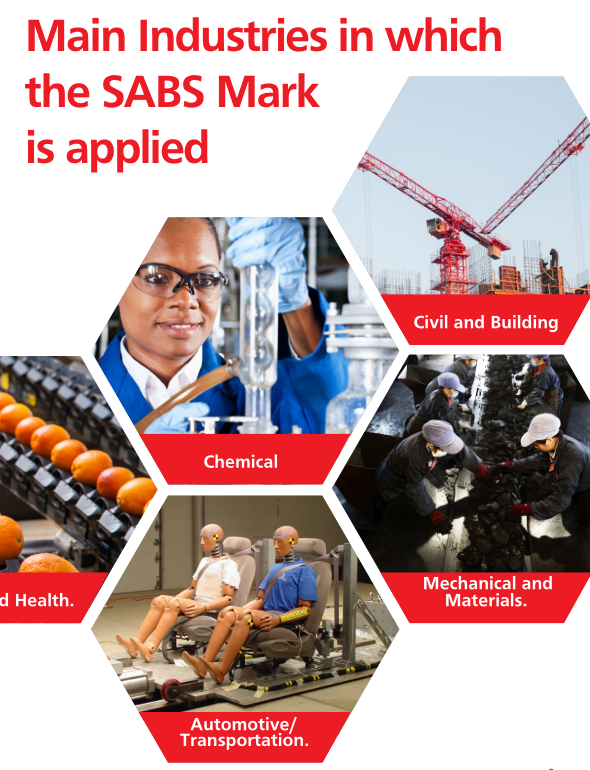
Main Industries in which the SABS Mark Is Applied
• Automotive/Transportation.
• Chemical.
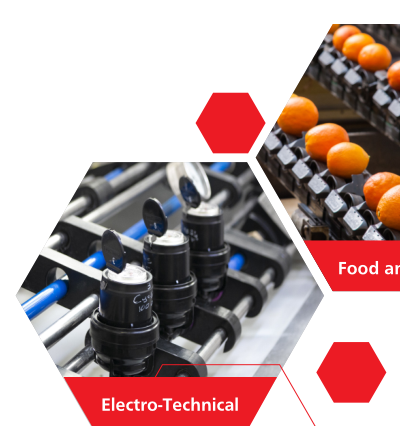
• Electro-Technical.
• Food and Health.
• Mechanical and Materials.
• Civil and Building
How to Obtain the SABS Mark
First enquire. You will be given advice on the steps to take towards product certification (see certification process flow chart). This includes identifying the relevant SANS specification which outline the characteristics and the performance and/or safety criteria that your product must comply with to qualify for the SABS Mark.
Next, access your factory’s quality management system. which must ensure the proficiency of the production line to manufacture product(s) of consistent quality. A formal Quality Management System that is certified to SANS/ ISO 9001 “Quality Management Systems” is an advantage, but it is not a prerequisite to obtain the SABS Mark. If your company is not certified to this standard, SABS will prescribe the requirements for your company’s quality control system which is contained in the SABS General Permit Conditions (GPC) document. Products should meet the specific permit requirements as stipulated in the SPC (Specific Permit Conditions).
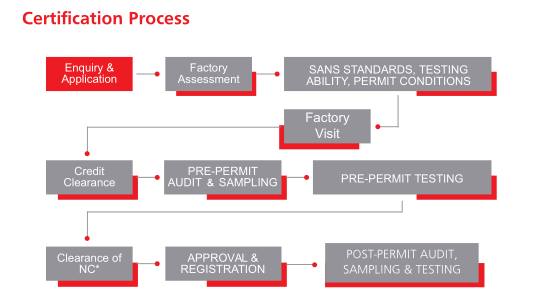
Once you have submitted your complete application the appropriate technical specification(s)
can be identified for product testing.
If you do not operate a certified Quality Management System that complies with the requirements of ISO 9001 then your quality control system will be assessed during the pre-permit phase and the following quality control system requirements will be verified for compliance as a minimum:
• Appointed quality management representative.
• Record of internal quality audits.
• Control of documents and reports.
• Production planned and carried out under controlled conditions.
• Customer complaints and corrective action
• Purchasing and control of incoming materials
• Handling, storage, packaging, preservation and delivery of the product
• Calibration and verification of test and measurement equipment and accuracy of measurements
• Control of nonconforming product, and
• Compliance to regulatory requirements, when appropriate.
The quality control, performance shall at no time fall below the level prevailing at the time that the permit holder was assessed for the purpose of the issue of the Mark permit.
The SABS will issue your Mark permit once the SABS is satisfied that:
• The product and or commodity is manufactured to the applicable technical standard
• This standard can consistently be maintained during the production process
• The necessary controls are in operation within the manufacturing process
• The product(s) have passed full testing, and
• The factory audit is positive.
If the product has already been tested by another accredited test facility, or if the factory has been certified to ISO 9001 by another accredited certification body, SABS may consider the recognition of some of the results, saving you the cost of possible duplicate tests and assessments.
Post-Permit Surveillance Audits
Once the permit has been issued, the SABS evaluates on-going compliance of the product(s) by:
• Regular post-permit sampling and testing, as specified in the Specific Permit Conditions (SPC) on product samples
• Regular surveillance audits of the quality system, and
• Regularly assessing the technical competency of the factory personnel and equipment.
Benefits of obtaining the SABS Mark
Benefits to Manufacturers
The SABS Mark on your manufactured product:
• Gives you a powerful feature (endorsement brand) for your marketing programme
• Reinforces your product(s) claims with your retailers, in government contracts, in tender submissions and in your export efforts
• Gives impact to your product(s) and adds prestige to your corporate image
• Is a valuable point-of-sale feature for all Mark bearing product packaging and promotional materials, and
• Enables your product(s) to comply with strict regulatory requirements, where appropriate.
• Give your company a marketing edge over your competitor
• To Ensure Consistency in the manufacturing of your product
Benefits to Importers
The SABS Mark on imported product(s) increases market accessibility and acceptability. It also facilitates the compliance of imported product(s) to South African regulatory requirements, where appropriate.
Benefits to Buyers and Retailers of Mark bearing products
Bulk purchasers, such as government departments, retailers and large companies prefer to buy certified products because it gives them peace-of-mind that a third party is looking after the product quality for them.
Benefits to Consumers
The SABS Mark on a product:
• Gives consumers confidence in the quality and safety of the product(s) they purchase, and
• Provides a system of guaranteed redress to consumers for faulty Mark bearing products via the SABS.
Benefits to Regulators
The SABS Mark Scheme provides the necessary evidence of product conformity that the regulators require from manufacturers and importers of product(s), that must comply with South African compulsory specifications.
The product conformity evidence provided through the SABS Mark Scheme enables the regulators to control product conformity for purposes of regulatory approvals. It also enables the regulators to ensure the public of ongoing product conformity through regular product testing, inspection of the production lines and the impartial verification and certification of compliance to product technical, safety and quality specifications.
Note that you will still have to apply for an LOA from the Regulator (NRCS)
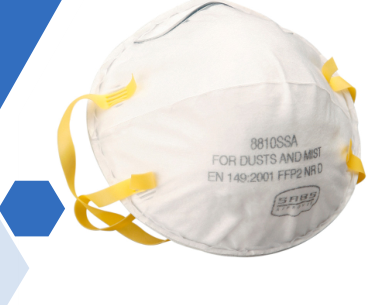
Rules for Using the SABS Mark
The SABS Mark may be applied to a product/commodity only if the manufacturer is in possession of a valid Mark permit, issued by the SABS in respect of a specific factory site and trade name or trade mark and if the product/commodity complies with the relevant mark specification(s). A test report issued by a SABS test laboratory for a product(s) cannot be used in anyway whatsoever to claim SABS approval, SABS compliance or the right to use the SABS name, mark or logos.
Accreditation
Accreditation is the procedure by which an accreditation body (SANAS) or RvA (Raad voor Accreditatie) gives formal recognition that a certification body is competent to carry out specific tasks.
SABS Commercial (SOC) LTD is accredited by the South African National Accreditation System (SANAS) against ISO 17065— General requirements for bodies operating product certification systems.